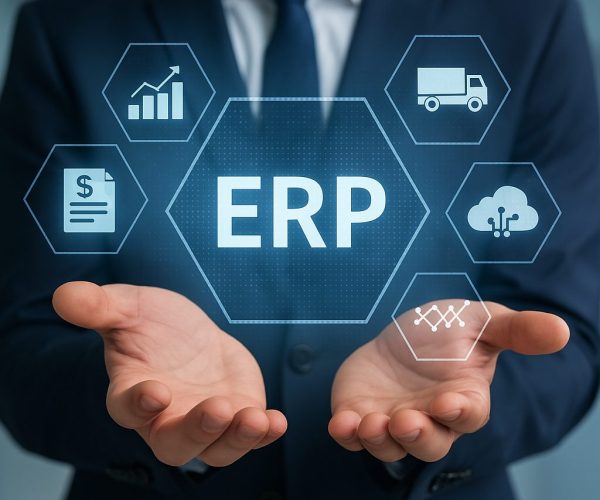

Enterprise Resource Planning (ERP) refers to a type of software that organizations use to manage day-to-day business activities such as accounting, procurement, project management, risk management, and supply chain operations.
A complete ERP suite also includes Enterprise Performance Management — tools that help companies plan, budget, forecast, and report financial results efficiently.
ERP systems act as a unified hub that connects all departments in one centralized platform. This integration reduces data duplication, enhances communication, and ensures that everyone works with accurate, up-to-date information. The result — higher productivity, better decision-making, and optimized business processes across the organization.
Organizational teams of the are just like families
In a modern business environment, collaboration and coordination define success.
An ERP system functions as the central nervous system of the organization — connecting departments such as finance, HR, production, logistics, and sales into one synchronized workflow. This shared visibility helps teams stay aligned and agile in a rapidly changing world.
ERP is not just a system; it’s the backbone that keeps every business process working in harmony.
Easy & Most Powerful Server Platform.
ERP platforms go far beyond simple accounting or data management tools.
They combine automation, analytics, and artificial intelligence to provide a real-time overview of business operations and support strategic decisions.
Below are some of the most significant advantages of implementing an ERP system:
- Unified database connecting all departments
- Automation of repetitive and manual tasks
- Real-time reporting and performance insights
- Improved supply chain and inventory control
- Enhanced collaboration and communication
- Better forecasting and financial accuracy
With ERP, companies can scale faster, reduce operational costs, and maintain full visibility of their performance — all within a single integrated ecosystem.
Content without backward-compatible data.
Organizations that still depend on outdated tools often struggle with inefficiency, inconsistent data, and missed opportunities.
ERP replaces disconnected systems with an intelligent, unified environment that synchronizes all core business processes — ensuring smooth collaboration and better control.
With a complete ERP platform, businesses gain agility, resilience, and the ability to adapt instantly to market shifts — making it one of the most powerful tools for sustainable growth.